Can AI Prove Mathematical Theorems? A Complete Guide
For more than a century, proving a theorem has been one of the most human things a person can do: a flash of insight, months of false starts, and finally a chain of reasoning no one can break. In November 2026, that picture changed. A mathematician working with an AI system said he had proved the most famous unsolved problem in mathematics — and within a day, independent checkers said the proof held up. So can AI prove mathematical theorems? The short answer is yes. The honest answer is more interesting: it depends on what you mean by “prove.”
The short answer: yes — but “prove” has two meanings
There are two very different ways an AI can produce a proof, and confusing them is the source of most of the hype and most of the scepticism.
The first is an informal proof: a proof written in ordinary mathematical English, the way a human would write it in a journal. Large language models are now very good at this style. They can write out plausible-looking arguments for hard problems. The trouble is that a plausible-looking argument is not the same as a correct one. As DeepMind’s researchers put it, such proofs “can contain subtle logical errors” that “cascade through a proof.” An informal proof from an AI still needs a human expert to check every step.
The second is a formal proof: a proof written in a special language — Lean, Isabelle or Coq — that a computer program checks, step by step, against the rules of logic. If it compiles without errors, the logic is sound. There is nothing to take on trust. This is where AI has made its real breakthroughs, because a formal proof gives the machine something no essay can: an exact, automatic verdict on whether it is right.
So the precise answer is: AI can now find proofs and have them verified by machine with certainty. What it cannot yet do is understand those proofs the way a mathematician does — and that gap matters more than it sounds.
Why mathematics is the perfect test for AI
Mathematics is the cleanest stress test for machine reasoning: a claim is either true or false, and a formal proof is mechanically checkable. In most fields, judging an AI’s output needs a human expert who can be fooled by confident, fluent nonsense. In mathematics, the proof checker either accepts the proof or it does not.
That property changes how AI can be trained. Most AI systems learn from human feedback — people rating which answers they prefer. That process rewards answers that sound right, which is one reason chatbots flatter and agree with their users. A theorem prover can be trained differently: it gets a reward only when the proof checker accepts the proof. There is no partial credit for a beautiful argument with a hidden gap. The reward signal is the truth itself.
How AI proves a theorem: the propose-and-check loop
Modern AI theorem proving works as a loop between two very different kinds of system: a language model that proposes and a symbolic engine that checks. Neither could do the job alone.
Given a theorem, the model suggests the next step — a lemma to try, a substitution to make, a known result to apply — predicting what comes next, as language models always do, except here the “text” is a sequence of formal proof steps. Trained on large libraries of existing formal mathematics, its suggestions are often good ones.
Then a symbolic engine checks. The proposed step is run through the proof assistant, which verifies it against the rules of logic. If the step is valid, the proof advances. If it is not, the attempt is discarded and the model tries another route. This is the neuro-symbolic pattern — the same loop that powers AI agents: the neural network supplies the creativity, the symbolic engine supplies the rigour, and a search algorithm manages the loop between them.
Reinforcement learning sharpens the proposer: the model is rewarded only for proofs the checker accepts, so over millions of attempts it learns which steps tend to lead somewhere. Google DeepMind’s AlphaProof, the flagship system in this area, was built this way — a language model fine-tuned with reinforcement learning inside Lean, trained on roughly a million formalised problems.
The same idea powers geometry: in AlphaGeometry, a language model suggests useful auxiliary constructions — the extra lines a geometer draws on a diagram — while a symbolic deduction engine grinds out the consequences. The model has the ideas; the engine does the bookkeeping and never makes an arithmetic slip.
The track record: from Olympiad medals to open problems
The Olympiad. At the 2024 International Mathematical Olympiad, AlphaProof together with AlphaGeometry 2 solved four of the six problems — a silver-medal-level performance, one point short of gold. Problem 6, a number-theory problem, was solved by only five of the roughly 609 human contestants, and the score was awarded by human judges. A year later, an advanced Gemini with Deep Think reached gold-medal standard at the 2025 IMO, solving five of six problems; the work was published in Nature in 2025.
Geometry at scale. AlphaGeometry 2 now solves 84% of the geometry problems from the last 25 years of International Mathematical Olympiads, up from 54% for the first version — better than the average human gold medallist on that set.
Open research problems. In 2026, DeepMind researchers reported a system, AlphaProof Nexus, that autonomously solved 9 of 353 open Erdős problems — including two questions that had been open for 56 years — and proved 44 of 492 open conjectures from the Online Encyclopedia of Integer Sequences, at a cost of a few hundred dollars of computing per problem. The system is now being deployed across combinatorics, optimisation, graph theory, algebraic geometry and quantum optics. DeepSeek’s open-weight prover, DeepSeek-Prover-V2, reports an 88.9% pass rate on the miniF2F benchmark and has solved 49 of 658 problems on the PutnamBench set.
None of this means AI has “solved mathematics.” Every system here works on problems humans first stated in formal language, and translating a problem into Lean is still largely done by hand. But the direction is unmistakable: the machine is no longer just a calculator — it is finding arguments no human had found.
November 2026: the Riemann hypothesis moment
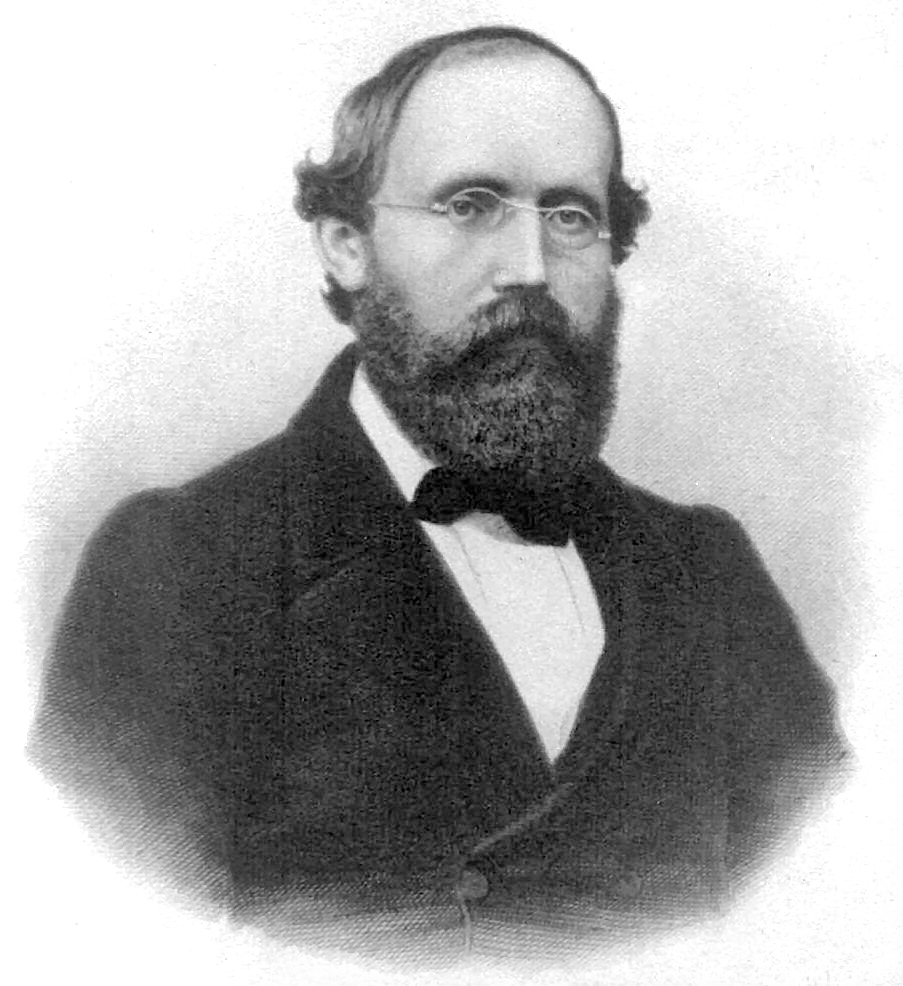
Then came the claim that made the question impossible to ignore. The Riemann hypothesis, posed by Bernhard Riemann in 1859, is the most famous unsolved problem in pure mathematics: it says that all the non-trivial zeros of the Riemann zeta function — the object that encodes the pattern of the prime numbers — lie on a single vertical line in the complex plane. Computers have checked the first ten trillion zeros and every one sits on the line, but checking cases is not a proof. It is one of the seven Millennium Prize Problems, each carrying a $1 million prize from the Clay Mathematics Institute.
On 20 November 2026, Levent Alpöge, a number theorist on leave from Harvard who works at Anthropic, posted a four-page note: “I believe I have, working with Claude, discovered a proof of the Riemann Hypothesis.” Claude is Anthropic’s large language model. Alpöge said he had worked with it for about six weeks, and that the same method also settles the Generalized Riemann Hypothesis, a far broader version of the problem. Instead of a conventional paper, he released the proof as Lean code, split across 14 archive parts — a formalisation he says is extremely long and which he has not yet written up as ordinary prose.
Within a day, the checking machinery swung into action — and this is where the formal-proof story matters. On 21 November, the Lean Focused Research Organization and the Mathlib Initiative, the groups that maintain the Lean language, issued a joint statement: “We have full confidence that Alpöge’s proof of the Riemann Hypothesis is correct.” Andrew Sutherland, a mathematician at MIT, independently compiled the proof in Lean and reached the same conclusion: “Honestly the chance that anything is fishy here is approximately zero.”
But verification is not understanding, and the mathematicians involved have been careful to say so. James Maynard, a Fields Medal winner at Oxford, said that “if this fully checks out, it is clearly a historic milestone in mathematics,” while warning that the proof currently exists as “incomprehensible code” that mathematicians will need months, perhaps years, to understand. The Clay Mathematics Institute still lists the Riemann hypothesis as unsolved: its rules require journal publication, at least two years, and general acceptance by the mathematical community before it will consider awarding the prize.
There are complications. The announcement came the day after Anthropic’s record stock-market debut, and the timing has drawn suspicion — Alpöge rejected that reading in his note, writing: “There is an obvious cynical view, to do with the timing, but it is false.” Hours after his announcement, a rival claim appeared: a human-written proof by Alessandro Maria Masullo, a Stanford PhD, posted by Ravi Vakil, president of the American Mathematical Society, who called it a “hurried announcement” of a draft he had planned to spend a year polishing.
For the day-by-day account, see our related coverage on informopedia.net: An AI Just Helped Prove Maths’ Most Famous Unsolved Problem — and Mathematicians Say It Checks Out.
What matters is the pattern. The Riemann claim was not a chatbot writing a clever essay. It was a human mathematician directing an AI for months, with the decisive artefact a machine-checkable proof independent experts verified within a day. That is the new model of AI mathematics: human direction, machine search, mechanical verification.
What AI still can’t do
The limits are large.
It can’t explain what it found. A formal proof that compiles is a certificate of correctness, not an explanation. Mathematicians do not just want to know that a theorem is true; they want to know why, so the ideas can be carried to other problems. Maynard’s warning — that the Riemann proof is “incomprehensible code” — is the central problem of the field right now. A proof nobody understands is a strange kind of victory.
It can’t choose the problems. Every success so far starts with a human stating the problem and, usually, formalising it. Deciding which questions are worth asking, which conjectures are plausible and which dead ends to abandon is still human judgement. AI can search a space of arguments; it cannot yet decide which space is worth searching.
It still hallucinates outside the formal world. The guarantee only holds inside a proof assistant. Ask a language model for a proof in ordinary words and it may produce a beautiful argument with a fatal gap — presented with total confidence. The formal checker is what makes the difference; without it, you are back to trusting fluent text.
The formalisation bottleneck is real. Most of mathematics has never been translated into Lean or any other formal language. The libraries are growing fast, but a theorem that has not been formalised cannot be machine-proved, however easy a human would find it. Until that translation catches up, AI proving stays concentrated where the formal libraries are deepest.
What this means for mathematics — and for the rest of us
For working mathematicians, the change is practical, not apocalyptic. The new tools are already useful as collaborators: they fill in the routine steps of a long argument, test whether a conjecture survives its first contact with rigour, and search for counterexamples faster than any graduate student. The mathematician’s job shifts towards the parts machines cannot do — framing questions, judging which ideas matter, and turning a verified proof into an explanation other humans can learn from.
For students, the lesson is narrower and more useful than “AI will do your homework.” A language model can check your reasoning, suggest approaches and explain a proof step by step. But an unchecked AI answer in mathematics is no more trustworthy than one anywhere else. The skill that matters now is the one mathematicians always needed: telling a real argument from a convincing fake. The difference is that everyone else now needs it too.
And for the rest of us, the Riemann claim is a preview of a new kind of scientific event: a result that is machine-verified before any human understands it. The proof may be finished. The argument about what it means — and the slow human work of turning code into comprehension — has only just begun. If that understanding catches up with the verification, as Maynard put it, “this will surely be viewed as one of the absolute pinnacles of mathematical results.”
So can AI prove mathematical theorems? Yes — and since November 2026, the strongest version of that claim is no longer hypothetical. What AI cannot do yet is the part that makes a proof mathematics rather than computation: understand it, explain it, and know why it matters. That part is still ours.
Frequently asked questions
Can AI prove theorems entirely on its own?
Not yet, in any meaningful sense. Systems like AlphaProof Nexus have solved open problems autonomously once humans stated them, but a human still frames the question, formalises it and directs the search. The Riemann proof was a human–AI collaboration: Alpöge directed the work over six weeks, Claude supplied key advances including a central step near the finish. The machine searched and checked; the human steered.
Is the Riemann hypothesis proved now?
Machine-checked, yes: the Lean and Mathlib communities say they have full confidence the formal proof is correct, and MIT’s Andrew Sutherland independently compiled it. Formally accepted, no: the Clay Institute still lists it as unsolved, and its rules require journal publication, two years and general acceptance. Human understanding will take months or years.
What is a formal proof?
A proof in a language like Lean, Isabelle or Coq, in which every logical step is checked by a computer program. If the code compiles without errors, the logic is sound. Unlike a proof in ordinary mathematical English, a formal proof leaves nothing to the reader’s judgement — which is why AI can be trusted when it produces one, and not when it merely writes a convincing essay.
Will AI replace mathematicians?
No — it changes what they spend their time on. AI is already good at searching for proofs, filling in routine steps and verifying arguments. It is not good at choosing which questions matter, understanding why a proof works, or explaining it to others. Those parts of mathematics are becoming more valuable, not less.
Can I use AI to check my maths homework?
Yes, with care. A chatbot can walk you through a problem, suggest approaches and spot errors — but it can also produce confident, wrong reasoning. Treat it as a tutor whose work you must verify, not as an answer key. If you want certainty, a formal tool like Lean gives it; for anything else, check the steps yourself.