Why Does Copper Turn Green? The Chemistry Behind Patina
Copper starts life a warm, salmon-pink metal — the colour of a brand-new penny. Leave it outside, though, and it changes. First it darkens to brown, then to black, and finally, over years, it turns a soft blue-green. The Statue of Liberty is the most famous example: she arrived in New York the colour of a penny and is now one of the greenest landmarks on Earth. No one painted her. The green is chemistry — a slow chain of reactions between copper, air, water and pollution that ends in a layer of green minerals called patina.
So why does copper turn green? Because copper reacts with oxygen first, then with the gases dissolved in rain and sea spray, building new compounds on its surface one layer at a time. The green is not one substance but a family of them, and which one forms depends on where the copper lives. This guide follows the whole chain — from shiny metal to green statue — and explains why the green layer, far from being damage, is what keeps copper standing for centuries.
The short answer
Fresh copper reacts with oxygen in the air to form cuprite, a reddish-brown copper oxide. Given more oxygen, the cuprite darkens into tenorite, a black oxide. Then rain, carbon dioxide and air pollution join in: the black oxide reacts with water, carbon dioxide and sulfur compounds to form green copper minerals — most commonly brochantite, a copper sulfate, along with the carbonate malachite and, near the sea, the chloride atacamite. The green coating is called patina (or verdigris), and once it forms it seals the metal underneath from further attack.
Three things are needed: oxygen, moisture and time. Without water, the later reactions barely happen — which is why copper kept indoors stays brown for decades, while a copper roof in a rainy city can be green within twenty years.
The Statue of Liberty was not always green
When the Statue of Liberty was unveiled in New York Harbor on 28 October 1886, she was the colour of a new penny. Her skin is made of about 31 tons of copper — roughly 62,000 pounds of it — hammered into sheets only about 2.4 millimetres thick and riveted over an iron frame designed by Gustave Eiffel. For the first few years she shone copper-brown in the harbour sun.
Then the chemistry began. By the early 1900s the statue had darkened, and by 1906 — twenty years after the unveiling — she had turned the blue-green colour we know today. The change alarmed people: in 1906 Congress set aside $62,000 to repaint her copper-coloured. The public objected, the plan was dropped, and the green stayed. It was the right call: the patina was protecting the copper underneath, and during the restoration of 1984–1986 — when workers replaced the statue’s corroded iron support bars with stainless steel ones and fitted a replica torch with a 24-karat gold flame — the copper skin itself was found to be in excellent condition. Even the patches of new copper added then were cut from a weathered copper rooftop at Bell Labs, chosen because its patina already matched the statue’s green.
Stage one: copper blushes red-brown
The first reaction is the simplest. Copper atoms on the surface give up electrons to oxygen in the air, forming copper(I) oxide — cuprite, Cu2O. It is reddish-brown, the colour of a penny left in a drawer for a few months. This happens within days or weeks of exposure, and research on atmospheric corrosion confirms that cuprite is always the first corrosion product, forming the layer in direct contact with the bare metal.
At this stage nothing looks dramatic: a new copper roof goes dull; a copper coin loses its shine. But the cuprite layer matters — it is the foundation everything else is built on, and in a dry, clean environment copper may never get past this stage, staying dull brown for years.
Stage two: it turns black
Given more oxygen, the cuprite oxidises further into copper(II) oxide — tenorite, CuO — which is black. This is the dark, almost sooty stage that surprises people: the statue went through a period of looking dark brown and then black before any green appeared. A copper object left in a damp, polluted place can sit at this black stage for years.
The black layer is where the chemistry gets interesting: tenorite reacts readily with sulfur dioxide in humid air, acting as a sponge for the gases around it — and what it soaks up decides what colour comes next.
Stage three: the green minerals arrive
The green itself comes last, and it is not one reaction but several, all needing a thin film of water on the metal — rain, dew or fog — to happen at all. Dry sulfur dioxide does nothing on its own; it is the water that lets the chemistry run.
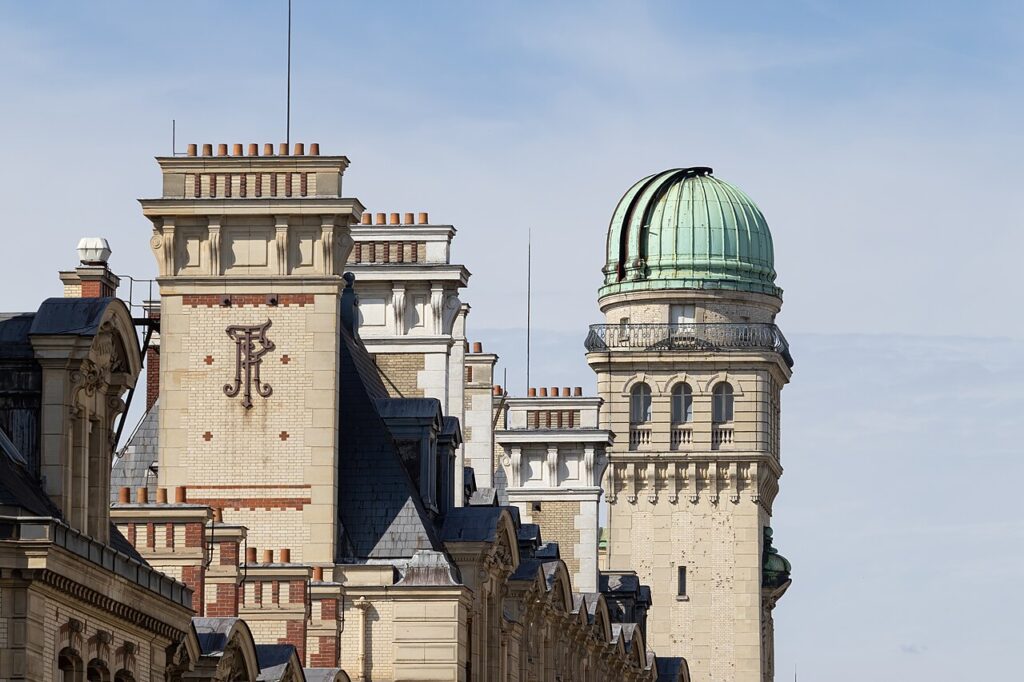
In towns and cities, where the air carries sulfur dioxide from burning fuel, the most common green mineral is brochantite, Cu4SO4(OH)6 — a copper hydroxysulfate. Studies of copper patination have found brochantite to be the most commonly occurring green salt in natural patinas. Where carbon dioxide dominates instead, the green is malachite, Cu2CO3(OH)2, the same mineral sold as a green gemstone; its blue cousin azurite, Cu3(CO3)2(OH)2, is what gives some patinas their blue tint. Near the sea, airborne salt changes the recipe again: chloride from sea spray produces atacamite, Cu2(OH)3Cl, a blue-green copper hydroxychloride. That is why a copper roof in a coastal town and one in an industrial city can end up distinctly different shades of green.
Why the green is different in different places
The green you see is a record of the air the copper has lived in. In a city with heavy traffic and old coal smoke, sulfate minerals dominate and the green runs dark and emerald. By the sea, chlorides push it towards blue-green. In clean country air, with little sulfur or salt around, carbonates dominate and the green is paler. The Statue of Liberty got a mixture of all three — harbor salt spray, New York’s coal smoke in the early 1900s, and carbon dioxide — which is why her colour is that particular blue-green rather than a pure emerald or a pure turquoise.
The same rule explains smaller mysteries: why the copper flashing on one side of a house turns green while the sheltered side stays brown. The metal is the same; the air is not.
How long does it take?
Slowly — and the range is wide. Research on copper patination puts the full transformation from clean copper to green patina at anywhere from 6 to 50 years, depending on the environment. A copper roof in a damp, polluted city can show noticeable green within 5 to 20 years; in a dry climate it can take much longer. The Statue of Liberty took about twenty years.
Small objects can move faster, because the same chemistry works on a smaller scale: a copper bracelet can leave a green mark on skin within a day, and a penny forgotten in a damp pocket can go green in weeks. The reaction is the same; only the surface area and the wetness differ.
The green layer protects the metal
Here is the part that surprises most people: the green is not damage. It is armour. Once the patina forms, it seals the copper surface and blocks oxygen and water from reaching the metal underneath. Chemists call this passivation, and it is the reason copper roofs can last for centuries and the reason the Statue of Liberty’s skin survived 140 years in a salty harbor. The same protective logic is at work in stainless steel, where a thin chromium-oxide film does the same job — and in the batteries guide’s story of corrosion, where the difference between a protective layer and a destructive one decides whether a metal survives or falls apart.
Compare that with rust. Rust is iron oxide, and it flakes away, exposing fresh iron to attack again and again until the metal is eaten through. Copper patina does the opposite: it sticks tight, stops growing once it is complete, and guards what is beneath it. That is why nobody repaints the Statue of Liberty, and why architects choose copper for roofs and domes they expect to outlast them.
Why copper jewellery turns your skin green
The same chemistry happens on your wrist, only faster. Sweat is salty and slightly acidic, and the natural oils on skin react with copper to form green copper salts — chelates — on the surface of a ring or bracelet. The green rubs off onto the skin as a faint stain. The Royal Society of Chemistry explains it plainly: the metal reacts with sweat to form compounds that range from blue to green, and because the patina is thin, it brushes off easily — leaving the green mark on your hand.
It looks alarming and is harmless: the stain is a surface deposit of copper compounds, not a rash, and it washes off with soap and water. It is also a clue to the metal — solid copper, brass and bronze can all do this, which is why a copper ring greens skin faster than a gold one, and gold does not react at all. The wedding-rings guide tells the longer story of why we wear rings on the left hand; the green is simply the chemistry of the metal meeting the chemistry of the body.
Pennies: why your change does not turn green the same way
If copper turns green, why don’t the pennies in your pocket? The answer is that most modern pennies are barely copper at all. Until 1982, a US penny was 95% copper and weighed 3.11 grams. In late 1982 the US Mint switched to a zinc core with a thin copper plating — 97.5% zinc and only 2.5% copper by weight, weighing 2.5 grams. The copper is now just a skin over a zinc centre, so there is far less copper to react, and the zinc underneath corrodes in its own way.
An older, pre-1982 penny is a different story: solid copper through and through, it will darken, then go green in damp conditions, exactly like a tiny copper roof. If you find a green penny in an old jar, check the date — 1981 or earlier means you are holding the real thing.
Verdigris on cookware: when green is a problem
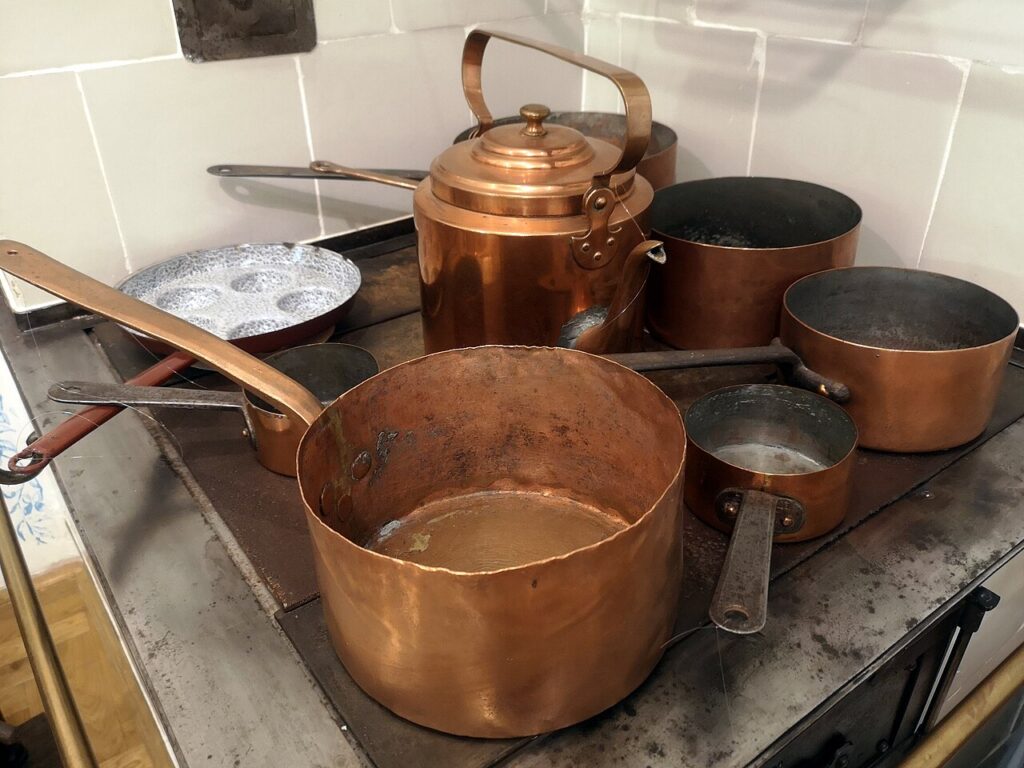
There is one place where green copper should not be left alone: the kitchen. “Verdigris” is used loosely for any blue-green copper tarnish, but strictly it means copper(II) acetate, Cu(CH3COO)2 — the bright blue-green crust that forms when copper meets vinegar or acidic foods like tomatoes and citrus. Unlike the carbonate and sulfate patinas on a roof, copper acetate is toxic if eaten in quantity: it can cause stomach pain and vomiting. That is why copper cookware is traditionally lined with tin, and why any green crust on a cooking surface should be cleaned off before the pan is used again.
It is easy to remove: a paste of lemon juice and salt, rubbed on with a soft cloth, dissolves the green compounds and returns the copper to bright metal; vinegar and salt work the same way. The rule for copper cookware is simple: wash it, dry it, and never store acidic food in it. A green roof is a triumph of chemistry. A green frying pan is a chore to clean.
Can you stop copper turning green — or speed it up?
Yes to both. To keep copper bright, the standard trick is to seal it: a clear lacquer or wax coating keeps air and moisture off the surface, which is why polished copper ornaments in a shop stay shiny while the same metal outside goes green. The coating has to be maintained — once it is scratched, the chemistry starts again underneath it. Regular polishing also works, by removing each new layer of oxide before it can develop further.
To force a patina, metalworkers do the opposite: they expose the copper to a chemical solution that drives the same reactions weather would take years to finish, producing a green finish in days. Architects use this on new copper roofs so a building does not spend its first decade looking patchy, and artists use it to give bronze sculptures their finished colour. Either way, the chemistry is the same — the only difference is who is in charge of the timetable.
So why does copper turn green? It is not decay, and it is not paint. It is the metal’s own doing: copper meeting the air, one slow reaction at a time, until it has built itself a green coat that will protect it for centuries. The Statue of Liberty has been wearing hers for 120 years, and she is not about to take it off.
Frequently asked questions
Is the green on copper toxic?
The green patina on roofs, statues and jewellery — mostly brochantite, malachite and atacamite — is stable and not a hazard to touch. The exception is verdigris, copper(II) acetate, the bright blue-green crust that forms when copper meets vinegar or acidic food; that one is toxic if eaten in quantity and should be cleaned off any cooking surface before use.
How long does copper take to turn green?
Between 6 and 50 years outdoors, depending on the environment: a copper roof in a damp, polluted city can show green within 5 to 20 years, while copper in a dry climate may take much longer. The Statue of Liberty took about twenty years. Small objects in wet, salty conditions can green in weeks.
Is patina the same as rust?
No. Rust is iron oxide, and it flakes away, exposing fresh metal to further attack until the iron is eaten through. Copper patina sticks tightly to the surface and seals the metal underneath, protecting it — the process chemists call passivation. That is why copper roofs last for centuries while iron rusts away.
Why is the Statue of Liberty green?
Because her 31-ton copper skin has oxidised in stages since 1886: first to red-brown cuprite, then to black tenorite, then to green minerals — mainly brochantite from New York’s sulfur-rich air, with malachite and sea-salt atacamite mixed in. She was fully green by 1906, and the patina has protected the copper ever since.
How do you clean green off copper?
Rub it with a paste of lemon juice and salt, or vinegar and salt, using a soft cloth, then rinse and dry thoroughly. The mild acid dissolves the green copper compounds without harming the metal underneath. Do not use steel wool or abrasive scourers, which scratch the surface.