Why Is There No Row 13 on Airplanes?
Settle into your seat, glance at the seat map, and count the rows: 11, 12… 14. Row 13 is gone. It is not a misprint, and the plane is not missing a row of seats. On many of the world’s airlines, the number 13 simply does not exist in the cabin — and the reason is a mix of ancient superstition, passenger psychology, and some surprisingly practical airline logic.
This guide explains where the fear of 13 comes from, which airlines skip the row and which ones keep it, the other numbers that vanish from seat maps around the world, and whether any of it matters for your safety. (It doesn’t — but the details are worth knowing.)
The short answer
Many airlines skip row 13 because a meaningful share of passengers considers the number unlucky, and skipping it costs the airline nothing. A Gallup poll found that 13% of Americans would be bothered by a hotel room on the 13th floor — and airlines reason, fairly, that a nervous flyer is the last person who needs one more thing to worry about at 35,000 feet.
But superstition is only half the story. Airlines also skip row numbers for dull, practical reasons: keeping seat maps consistent across different aircraft, making room for exit rows, and landing on a tidy final row number. Row 13 is simply the easiest number to drop, because nobody complains when it goes.
Why is 13 unlucky in the first place?
Nobody knows exactly when 13 acquired its bad reputation, but the usual suspects are two ancient stories.
The first is the Last Supper: thirteen people sat at the table, and Judas Iscariot — the disciple who betrayed Jesus — was the thirteenth guest to take his seat. The second comes from Norse mythology, in which the trickster god Loki crashed a feast in Valhalla attended by twelve gods, becoming the uninvited thirteenth guest. His mischief led to the death of Baldr, the most beloved of the gods, and mourning across the earth.
There is also a popular claim that the Code of Hammurabi, the Babylonian law code from around 1780 BCE, deliberately omitted its thirteenth law. That one is a myth: the original code was never numbered at all, and a 1910 English translation accidentally dropped one article. Later translations include all of them. It is a good example of how a superstition can manufacture its own evidence.
The fear even has a formal name: triskaidekaphobia, from the Greek treiskaideka (thirteen) and phobos (fear). The term was in use by 1910, when the psychologist Isador Coriat used it in his book Abnormal Psychology; an 1897 article in the American Journal of Psychology had already used an early variant spelling. The fear of Friday the 13th has its own, even longer name — paraskevidekatriaphobia — and the Apollo 13 accident in 1970 gave the number a fresh, televised association with disaster.
Part of the unease may be arithmetic. Twelve feels complete: twelve months in a year, twelve signs of the zodiac, twelve gods of Olympus, twelve apostles. Thirteen is one too many at a table set for twelve — an unwelcome guest, and the feeling stuck.
How many people actually care?
More than you might think — and airlines have the numbers to prove it. In a USA Today/Gallup poll conducted February 9–11, 2007, researchers asked 1,006 American adults how they would feel about a hotel room on the thirteenth floor. Exactly 13% said it would bother them — and three-quarters of that group, 9% of all Americans, said they would be bothered enough to ask for a different room.
An earlier Gallup poll, from 1996, found that 9% of Americans described themselves as superstitious about the number 13 itself. That is a minority, but it is a large one: on a 300-seat aircraft, it represents roughly 27 to 39 passengers. An airline that can keep those passengers comfortable by changing a number on a seat map has every reason to do it — the cost is zero, and the goodwill is real.
It is the same calculation hotels made long ago. Many high-rise hotels skip the 13th floor entirely, and their elevators jump straight from 12 to 14. The airline version is just the same superstition at cruising altitude.
Which airlines skip row 13 — and which ones don’t
There is no industry rule. Each airline decides for itself, and the picture varies even within a single airline’s fleet, because seat maps differ by aircraft type. A survey of major airlines by Statista found the practice widespread but far from universal.
Airlines known to skip row 13 include Lufthansa, Air France, Iberia, ITA Airways, Ryanair and KLM in Europe; Virgin Atlantic — the only one of the UK’s biggest airlines to do it; United Airlines on most of its aircraft types and Alaska Airlines on its Boeing 737-800s; and in Asia, Cathay Pacific, Singapore Airlines, Thai Airways, China Airlines and Hong Kong Airlines, along with Air New Zealand, Emirates and Qatar Airways.
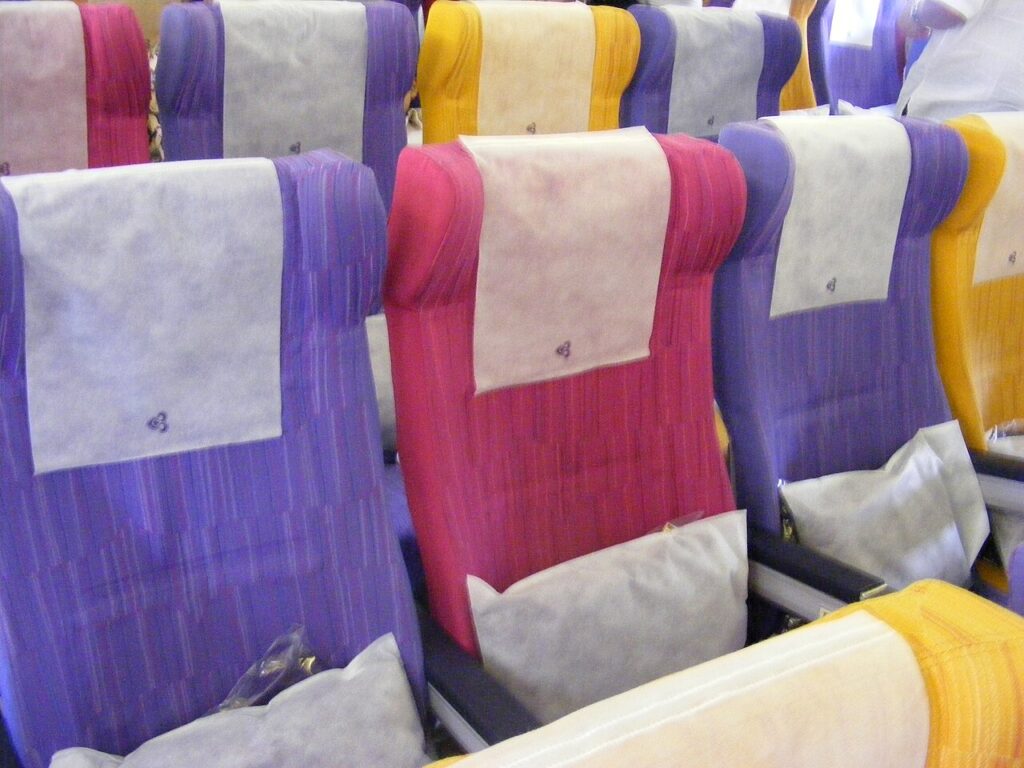
But plenty of major carriers keep row 13 exactly where you would expect it. Delta’s Airbus A220-100 has a row 13. So do American, Southwest and JetBlue in the United States, and British Airways, easyJet and Jet2 in the UK. If you have ever sat in row 13, you were almost certainly on one of these.
The variation is a useful reminder that this is a marketing and comfort decision, not a safety one. The same aircraft type can have a row 13 on one airline and skip it on another. Nothing about the plane changes — only the label on the seat.
It’s not just 13: the other numbers that disappear
Thirteen is the most famous missing number, but it is not the only one. Superstition is local, and airlines that fly internationally adapt to their passengers.
In Italy and Brazil, the unlucky number is 17. Written in Roman numerals it is XVII — rearrange the letters and you get VIXI, Latin for “I have lived,” a phrase carved on Roman tombs. Lufthansa skips row 17 as well as row 13, and some airlines drop 17 on routes to and from Italy and Brazil.
In China, Japan and Korea, the number to avoid is 4, because the word for four sounds like the word for death — a fear sometimes called tetraphobia. On some routes to and from China, airlines also skip 14, which in Cantonese sounds close to “will die.” United’s Boeing 777-200 skips both 13 and 14, and its Airbus A319 drops rows 12 to 14 entirely.
So the empty space on a seat map is not always about 13. It is about whichever number the passengers on that route would rather not see.
The practical reason nobody talks about
Superstition explains why 13 goes missing. It does not explain why seat maps skip numbers at all — and here the reason is thoroughly unromantic.
Airlines renumber rows constantly for operational reasons. Keeping the same row number for the same kind of seat across different aircraft types makes booking, boarding and crew procedures simpler. Exit rows force renumbering. First class takes up more space than economy, so on some Boeing 737 layouts the first rows are 1, 2 and 3 — and rows 4, 5 and 6 simply don’t exist. Airlines also like their cabins to end on a round number, like 30 or 40, so they drop rows along the way to make the maths work.
Once rows are being skipped for practical reasons anyway, dropping 13 as well is effortless. The number is already on the chopping block; superstition just decides which number gets cut.
The renumbering even created an unexpected accessibility problem. In 2023, United Airlines spokesperson Linda Jojo told the Washington Post that the absence of row 13 on some aircraft makes it harder for blind and low-vision passengers to count rows by touch to find their seat — one reason the airline added Braille markers to its cabins. A superstition meant to comfort some passengers had quietly made flying harder for others.
The same superstition on the ground
Airlines did not invent this habit. Walk into a high-rise hotel or an office tower almost anywhere in the West and the elevator panel tells the same story: 11, 12, 14. The floor exists — you can stand on it — but the button says 14.
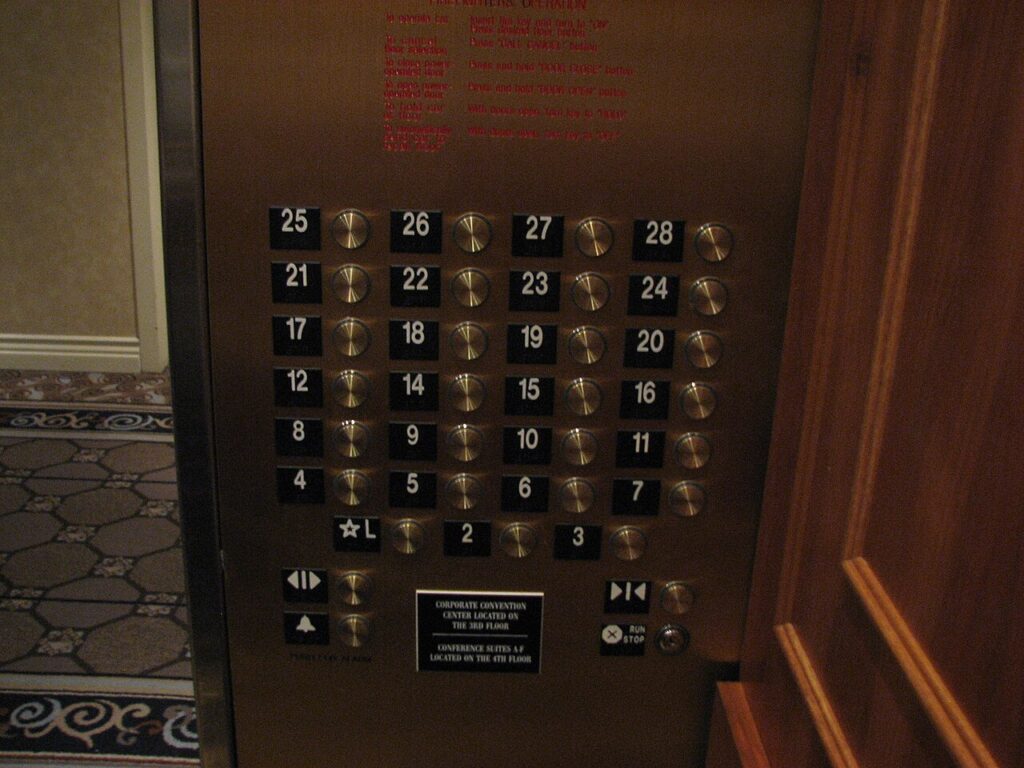
The economics are identical to the airline version. A developer who labels a floor 13 risks rooms that some guests will not book and some buyers will not buy. Renumbering is free. The 2007 Gallup numbers explain the rest: if 9% of your customers would ask to move, why hand them a reason?
It is worth noting that the fear is fading in some places. Developers are less likely than they once were to build towers without a floor 13, and younger travellers are less likely to care. But in aviation, where the customer is already anxious and the fix is free, the missing row is likely to survive for a long time yet.
Is a seat in row 13 — or row 14 — any less safe?
No. There is no evidence that the number on your seat affects your safety in any way, and no aviation authority treats it as a factor. Aircraft safety comes from engineering, maintenance, crew training and air traffic control — none of which consults numerology.
There is also a quiet irony for anyone who books row 14 to dodge the unlucky number. On a plane that skips row 13, the seats labelled row 14 are the thirteenth row of seats. The airline removed a label, not a row. If 13 were genuinely dangerous, the people in row 14 would be in exactly as much trouble as anyone else — they would just have a different number on their boarding pass.
So if your seat map shows a row 13, take it without a second thought. And if it jumps from 12 to 14, take row 14 with the same confidence. The only thing row 13 ever threatened was peace of mind — and the airlines decided that was worth protecting.
Frequently asked questions
Do all airlines skip row 13?
No. Many do — including Lufthansa, Air France, Ryanair, United on most aircraft types, Cathay Pacific and Singapore Airlines — but Delta, American, Southwest, JetBlue, British Airways, easyJet and Jet2 all have a row 13. The practice varies by airline and even by aircraft type within the same fleet.
Is row 13 unlucky or unsafe?
There is no evidence that sitting in row 13 is any less safe than any other row. The missing row is a response to superstition, not to risk. On planes that skip 13, the seats marked row 14 are physically the thirteenth row — the airline changed a label, not the aircraft.
Why is 13 considered unlucky?
The most common explanations are the Last Supper, where Judas was the thirteenth guest, and a Norse myth in which Loki became the uninvited thirteenth guest at a feast of twelve gods. The fear has a formal name, triskaidekaphobia, in use since at least 1910. The popular claim that the Code of Hammurabi omitted its thirteenth law is a myth — the original was never numbered.
Do airlines skip any other numbers?
Yes. Some skip row 17 on routes to Italy and Brazil, where XVII rearranges to VIXI, Latin for “I have lived.” Others skip 4 and 14 on routes to East Asia, where the numbers sound like words for death. Airlines also skip rows for practical reasons, such as exit rows and keeping seat numbers consistent across aircraft types.
Do hotels do the same thing with the 13th floor?
Yes — many high-rise hotels and office buildings skip the 13th floor, with elevators jumping from 12 to 14. A 2007 Gallup poll of 1,006 American adults found 13% would be bothered by a room on the 13th floor, and 9% would ask to be moved. The logic is the same as the airlines’: renumbering costs nothing and keeps a sizable minority of guests comfortable.
The bottom line
Row 13 disappears from many airplanes because a real, measurable share of passengers finds the number unlucky — and because airlines already renumber rows for practical reasons, so dropping one more number costs nothing. The fear itself is ancient, built from the Last Supper, a Norse feast, and a mistranslated Babylonian law code, and it still shapes the cabins we fly in today.
It changes nothing about the flight. The thirteenth row of seats is still there, whatever number is painted on it. But the next time your seat map jumps from 12 to 14, you will know exactly why — and that the empty space is one of the oldest superstitions in the world, still doing its quiet work at 35,000 feet.
For more on how the aircraft itself works, see our guide on how planes navigate across empty oceans — and for another everyday tradition with surprisingly murky origins, see why we wear wedding rings on the left hand.