RAG Failure Modes: A Complete Taxonomy
What RAG is, and why it breaks
Retrieval-augmented generation, or RAG, is the architecture behind most serious AI assistants today. Instead of answering purely from what a language model memorised during training, a RAG system first searches a collection of documents — manuals, policies, research papers, support tickets — and then asks the model to answer using what it found. When it works, answers are current and sourced. When it fails, the failure often looks like the model misbehaving, even though the model is the last thing to blame.
That confusion is why a complete RAG failure modes taxonomy matters. In July 2026, researcher Anupama Garani published the first systematic map of how RAG systems fail at the TrustNLP workshop: 33 distinct failure modes across seven pipeline stages, built from a structured review of 48 sources. It extends the classic list — the seven failure points Barnett and colleagues identified in 2024 from three production systems — and grades the evidence for each mode. Twelve of the 33, including all eight agentic modes, have no dedicated peer-reviewed evidence at all.
This guide translates that taxonomy into plain language: every failure mode, what it looks like in practice, and what fixes it. Use it as a diagnostic checklist the next time your RAG system gives a wrong answer.
How a RAG pipeline works
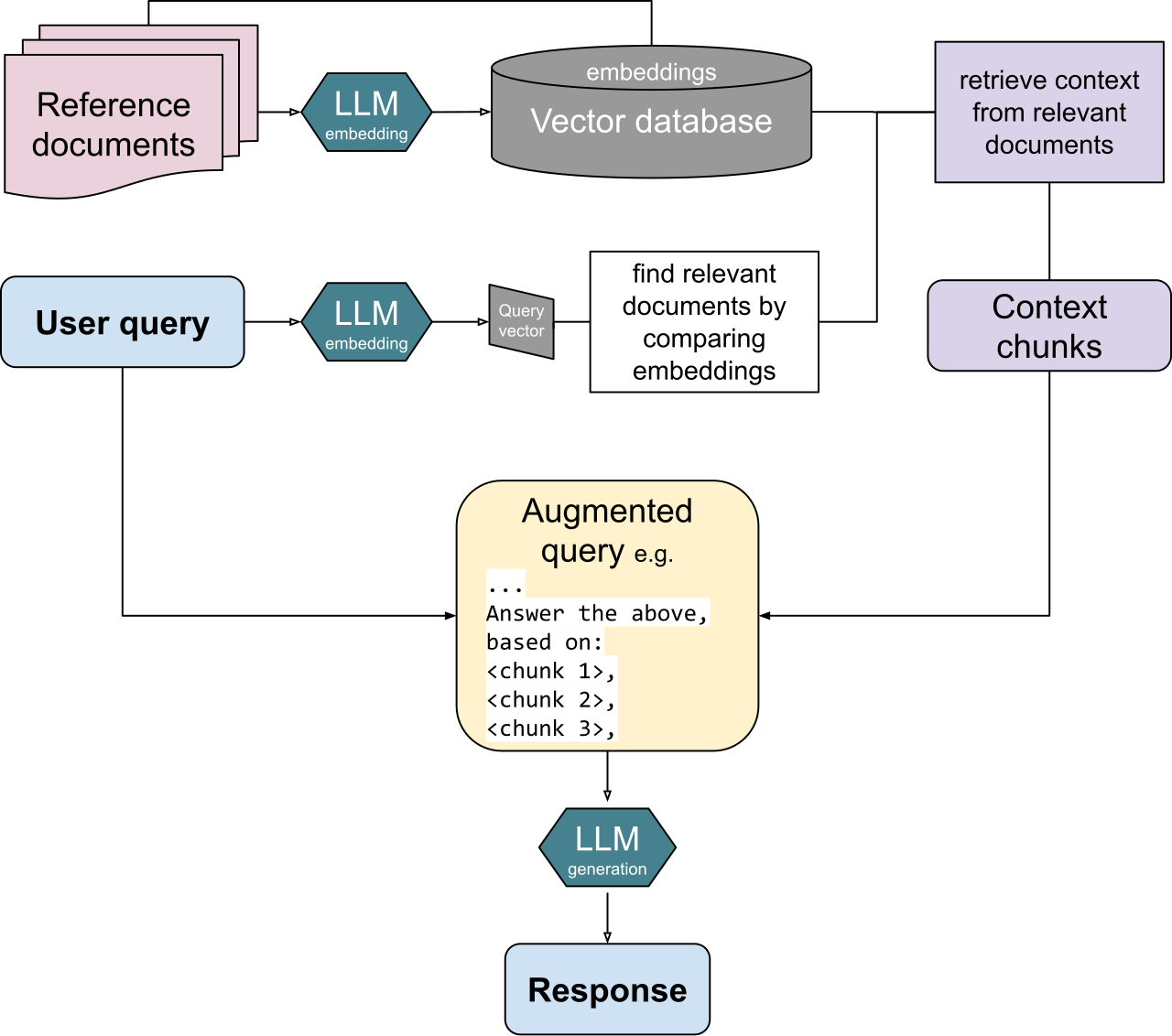
A RAG system has three phases. Offline, documents are ingested, split into chunks, converted into vector embeddings, and stored in an index. Online, a user question is encoded the same way, the most similar chunks are retrieved, and the language model generates an answer from them. In agentic RAG, an agent plans multi-step work and runs several retrieval rounds. Failures can enter at any of these steps — and a defect introduced early creates a quality ceiling no later fix can lift.
The RAG failure modes taxonomy at a glance
The 33 modes are organised by the seven pipeline stages where they originate. Evidence is graded Strong (a dedicated empirical study isolated the mechanism), Moderate (supporting evidence from broader studies), or Limited (architectural analysis only). Retrieval and generation are the best-studied stages; representation, evaluation, and agentic orchestration are the least studied — even though agentic RAG is the fastest-growing deployment pattern.
| Stage | Failure modes | Evidence |
|---|---|---|
| 1. Ingestion (F1–F4) | Stale data; missing documents; layout parsing errors; multimodality conversion loss | 2 Strong, 2 Moderate |
| 2. Representation (F5–F6) | Tokenization fragmentation; embedding drift and model mismatch | Both Limited |
| 3. Retrieval (F7–F12) | Chunking boundary errors; domain embedding mismatch; multi-hop reasoning gaps; Graph RAG trade-offs; low recall and ranking failures; position-of-gold bias | 4 Strong, 2 Moderate |
| 4. Generation (F13–F17) | Hallucination despite context; conflicting information unresolved; incomplete answers; incorrect specificity; wrong output format | 2 Strong, 2 Moderate, 1 Limited |
| 5. Evaluation (F18–F19) | Metric inadequacy; lack of continuous monitoring | 1 Strong, 1 Limited |
| 6. Deployment (F20–F25) | Latency and cost bottlenecks; auditability gaps; domain portability degradation; PII and compliance leaks; prompt sensitivity; authorization failures | All Moderate |
| 7. Agentic orchestration (F26–F33) | Planning failures; tool selection and execution errors; context memory degradation; multi-agent coordination failures; recursive hallucination cascades; unbounded cost and latency spirals; unsafe reasoning chains; attribution and governance gaps | All Limited |
The original seven failure points
Before the 33-mode taxonomy, the standard reference was Barnett and colleagues’ 2024 paper, Seven Failure Points When Engineering a Retrieval Augmented Generation System, based on three real deployments in research, education, and biomedical question answering. All seven still appear in the new taxonomy, now mapped to their stages:
- Missing content — the answer is not in the knowledge base, but the system answers anyway instead of saying so (now F2).
- Missed top-ranked documents — the answer exists but never ranks inside the top-k results returned (now F11).
- Not in context — the right chunk was retrieved, then dropped while results were consolidated into the prompt (now F3/F11 boundary).
- Not extracted — the answer sits in the context, but the model fails to pull it out, usually because of noise or contradictory passages (now F13/F14).
- Wrong format — you asked for a table; the model ignored it (now F17).
- Incorrect specificity — the answer is too general or too specific for what was asked (now F16).
- Incomplete — accurate but omits information that was available in context (now F15).
The seven are still the fastest way to triage a bad answer. The 33-mode version adds everything they miss: what can go wrong before retrieval starts, what goes wrong after deployment, and the new failure class agents introduce.
Stage 1: Ingestion failures (F1–F4)
Ingestion failures corrupt the knowledge base before any retrieval or generation takes place. F1, outdated or stale data: the index contains superseded documents, so the system faithfully reports obsolete information — in one benchmark, stale data both reduced accuracy and misled models into harmful outputs even when current information was available. Fix it with versioned ingestion and expiry dates. F2, missing or incomplete documents: whole topics are absent from the corpus, so the correct behaviour — a refusal — never happens. Fix it by measuring corpus coverage against real user questions.
F3, layout parsing errors: tables, multi-column text, figures, and equations resist uniform processing, so structure is destroyed on the way in. Layout-unaware methods fail badly on long documents — one benchmark used documents averaging 65 pages — and OCR errors cascade through the whole pipeline. F4, multimodality conversion loss: information carried by images, charts, and diagrams is lost when documents are converted to text only. Both are fixed the same way: layout-aware parsing that preserves tables and structure, and multimodal embeddings for documents where the chart is the answer.
Stage 2: Representation failures (F5–F6)
Representation failures are the quietest in the taxonomy — and the most dangerous for exactly that reason. They degrade retrieval quality while remaining invisible to generation-level metrics, so teams misattribute them to later stages. F5, tokenization fragmentation: tokenizers split domain terms and compound words into subword fragments, degrading embedding coherence. One study found that replacing fragmented sequences with semantic slots improved recall-at-1 from 0.104 to 0.430. F6, embedding drift and model mismatch: embeddings become inconsistent as models are updated, or the retrieval encoder and the generation model use different tokenizers and quietly disagree about what words mean. Neither mode has a dedicated RAG-specific study — both are graded Limited — yet both create systematic performance ceilings. The defence is simple: version embeddings with models, re-index when either changes, and test retrieval quality directly.
Stage 3: Retrieval failures (F7–F12)
Retrieval is the most studied stage — four of its six modes carry Strong evidence — and it is where most RAG systems actually break. F7, chunking boundary errors: documents are split in ways that break meaning or strand the answer across two chunks, neither of which is sufficient alone. Adaptive chunking reached retrieval precision of 0.50 against 0.17 for fixed-length baselines in a clinical comparison. F8, domain embedding mismatch: general-purpose embedding models fail to capture domain-specific meaning — in finance, general-benchmark performance showed no correlation with financial-benchmark performance. Use a domain-adapted embedding model. F9, multi-hop reasoning gaps: questions needing connections across several documents are not served by single-step retrieval; planning-based retrieval improved answer accuracy by up to 76.78% on multi-hop benchmarks.
F10, Graph RAG trade-offs: knowledge-graph retrieval buys structural coherence at the price of content coverage, sacrificing recall for precision. F11, low recall and ranking failures: relevant documents exist but rank below the top-k cutoff or are never retrieved at all. Hybrid search (dense plus keyword retrieval), reranking the top 50–100 candidates, and raising top-k are the standard fixes. F12, position-of-gold bias: language models attend to retrieved documents by position, not relevance, ignoring middle-placed content in a U-shaped pattern. Position-aware reordering cut the number of model queries needed by up to 65% and improved accuracy by 34% on long contexts.
Stage 4: Generation failures (F13–F17)
Generation failures are what users actually see, which is why they get blamed for everything — including failures that started three stages earlier. F13, hallucination despite context: the model produces claims the retrieved documents do not support, even with relevant context available. It is the most studied RAG failure, measured by faithfulness evaluation in frameworks such as RAGAS and RAGChecker. F14, conflicting information unresolved: retrieved documents contradict each other and the generator silently picks one side instead of flagging the conflict. F15, incomplete or partial answers: the response answers one part of a multi-part question. F16, incorrect specificity: the answer is too vague or too detailed for the question. F17, wrong output format: the content is right but the structure is wrong — broken JSON, a missing table, a citation template ignored — which can break downstream parsing. Fixes here are generation-side: stricter grounding instructions, citation requirements, and output validation.
Stage 5: Evaluation failures (F18–F19)
A RAG system can pass its evaluation and still fail in production, because the evaluation itself is broken. F18, metric inadequacy: standard metrics such as BLEU, ROUGE, and exact match fail to capture faithfulness or usefulness; RAGChecker demonstrated far better correlation with human judgement than prior metrics. F19, lack of continuous monitoring: systems are evaluated at development time and then left unmonitored, so quality degrades silently as data and models evolve. This mode has only Limited evidence, but it turns every other failure into a surprise: without production monitoring, a slow drift in the corpus can rot answers for weeks before anyone notices.
Stage 6: Deployment failures (F20–F25)
Deployment failures only appear under real-world constraints of scale, governance, and multi-user access — which is why they are the primary concern of practitioners and yet carry only Moderate evidence across the board. F20, latency and cost bottlenecks: end-to-end latency exceeds acceptable thresholds, or better quality demands disproportionate cost. F21, auditability gaps: the system cannot show which documents influenced a specific output — a real problem in regulated settings. F22, domain portability degradation: a system tuned for one domain degrades sharply in another. F23, PII and compliance leaks: retrieved documents or generated responses expose personal or regulated data. F24, prompt sensitivity: small prompt variations cause large performance changes. F25, authorisation and policy failures: outputs violate role-based access controls despite technically correct retrieval — the system shows a user documents they were never permitted to see. F23 is about sensitive content; F25 is about access rules not being enforced. Both are fixed at the architecture level, not with prompts: permission-aware retrieval and redaction before indexing.
Stage 7: Agentic orchestration failures (F26–F33)
Agentic RAG — agents that plan, call tools, and run multi-step retrieval — is the fastest-growing deployment pattern and the least understood. All eight of its failure modes carry Limited evidence: no peer-reviewed benchmarks exist for any of them. F26, planning failures: agents generate plans that are too complex, too simple, or circular. F27, tool selection and execution errors: the agent picks the wrong tool or passes malformed parameters. F28, context memory degradation: the agent forgets earlier steps or leaks context across queries. F29, multi-agent coordination failures: orchestrators deadlock or agents produce contradictory outputs.
F30, recursive hallucination cascades: a hallucinated intermediate result triggers the next retrieval, so each step builds on a fabrication and the error compounds — the agentic version of F13, a self-reinforcing loop rather than a one-off error. F31, unbounded cost and latency spirals: workflows with no guardrails on execution depth rack up cascading costs through recursive tool calls. F32, unsafe reasoning chains: multi-step reasoning produces a harmful output through steps that are each individually innocuous. F33, attribution and governance gaps: across a multi-step workflow, claims can no longer be traced to source documents, and agents can collectively breach compliance rules while each action looks compliant. Until benchmarks exist, the defence is defensive engineering: hard caps on steps and spending, verification of intermediate results, and full tracing of every tool call.
Why failures cascade — and how to diagnose them
The taxonomy’s most important finding is not any single mode but the pattern across them: failures cascade downstream. A chunking error degrades embedding quality, which lowers retrieval recall, which makes hallucination structurally inevitable — yet generation-level metrics blame the model. The paper calls this cascade blindness: the systematic underestimation of end-to-end failure rates that happens when evaluation measures each stage in isolation.
Its worked example makes the point concrete. A clinical decision-support RAG system began producing hallucinated citations to guidelines, while stage-local evaluation looked fine. The symptom was F13, but the root cause was F3: table boundaries in dosing tables were broken during ingestion, splitting dosage values from the conditions they applied to, and chunking (F7) sealed the damage. The test set had never contained the affected document types, so it could not surface the cascade. Fixing the parsing — not the prompt — resolved the hallucination.
To diagnose your own system, work backwards from the symptom. If the answer is wrong, first check whether the retrieved context supports it; if it does not, the failure is in retrieval or earlier, and no prompt change will help. If the evidence is in the context and the answer still fails, the failure is in generation. Sample fifty real failures, assign each a stage and a mode, and count — the ranked list is your work queue. LlamaIndex’s RAG failure mode checklist covers the same ground in practitioner form, from retrieval hallucination through config drift to observability gaps.
What we still do not know
Twelve of the 33 modes have no dedicated empirical study, and the gap is concentrated exactly where the field is moving: representation and agentic orchestration. There are no RAG-specific studies isolating tokenization fragmentation or embedding drift, and no controlled benchmarks for any agentic failure mode. That is the taxonomy’s warning as much as its map: the most complex architectures in production today are also the least examined. If you are building agentic RAG, assume the failure modes are real, instrument everything, and treat the absence of evidence as a reason for caution, not confidence.
Frequently asked questions
How many RAG failure modes are there?
33, according to the 2026 TrustNLP taxonomy by Anupama Garani, across seven pipeline stages: ingestion, representation, retrieval, generation, evaluation, deployment, and agentic orchestration. It extends Barnett and colleagues’ classic seven failure points from 2024.
What is the most common RAG failure mode?
Retrieval failures are the most common and the best studied: relevant documents ranking below the top-k cutoff, chunking boundaries splitting the answer, and domain embedding mismatch. In practice, most wrong answers trace to retrieval or earlier stages, not to the language model.
Why does my RAG system hallucinate even with the right documents?
That is F13, hallucination despite context: the model produces claims the retrieved documents do not support. It can also be a symptom of an upstream failure, such as broken tables (F3) or split chunks (F7). Check the retrieved passages before changing the prompt.
What is cascade blindness in RAG evaluation?
Cascade blindness is the systematic underestimation of end-to-end failure rates when evaluation measures each pipeline stage in isolation. A chunking error lowers retrieval recall, which makes hallucination inevitable, yet stage-local metrics blame the generator. The fix is cascade-aware evaluation with multi-stage labelled traces.
How do I find which failure mode is breaking my RAG system?
Work backwards from the symptom: check whether the retrieved context supports the answer. If not, the failure is in retrieval, representation, or ingestion. Sample fifty real failures, assign each a stage and a mode from this RAG failure modes taxonomy, and count them — the ranked list is your fix queue.
Further reading
For the full picture, read the taxonomy itself alongside the classic seven-point paper and the practitioner checklist: the TrustNLP 2026 paper lays out all 33 modes with definitions and evidence grades; Barnett and colleagues’ 2024 paper shows how the seven original failure points were found in real deployments; and LlamaIndex’s checklist turns the same ideas into a debugging workflow. Our broader overview of the field is the complete guide to artificial intelligence, and for how today’s models actually reason, see Can AI Prove Mathematical Theorems? and What Is Gemini 4 Carbon?